


.avif)
.avif)
.avif)
.avif)

iPhone Text Effects: Tips and Tricks
September 21, 2026

Phones
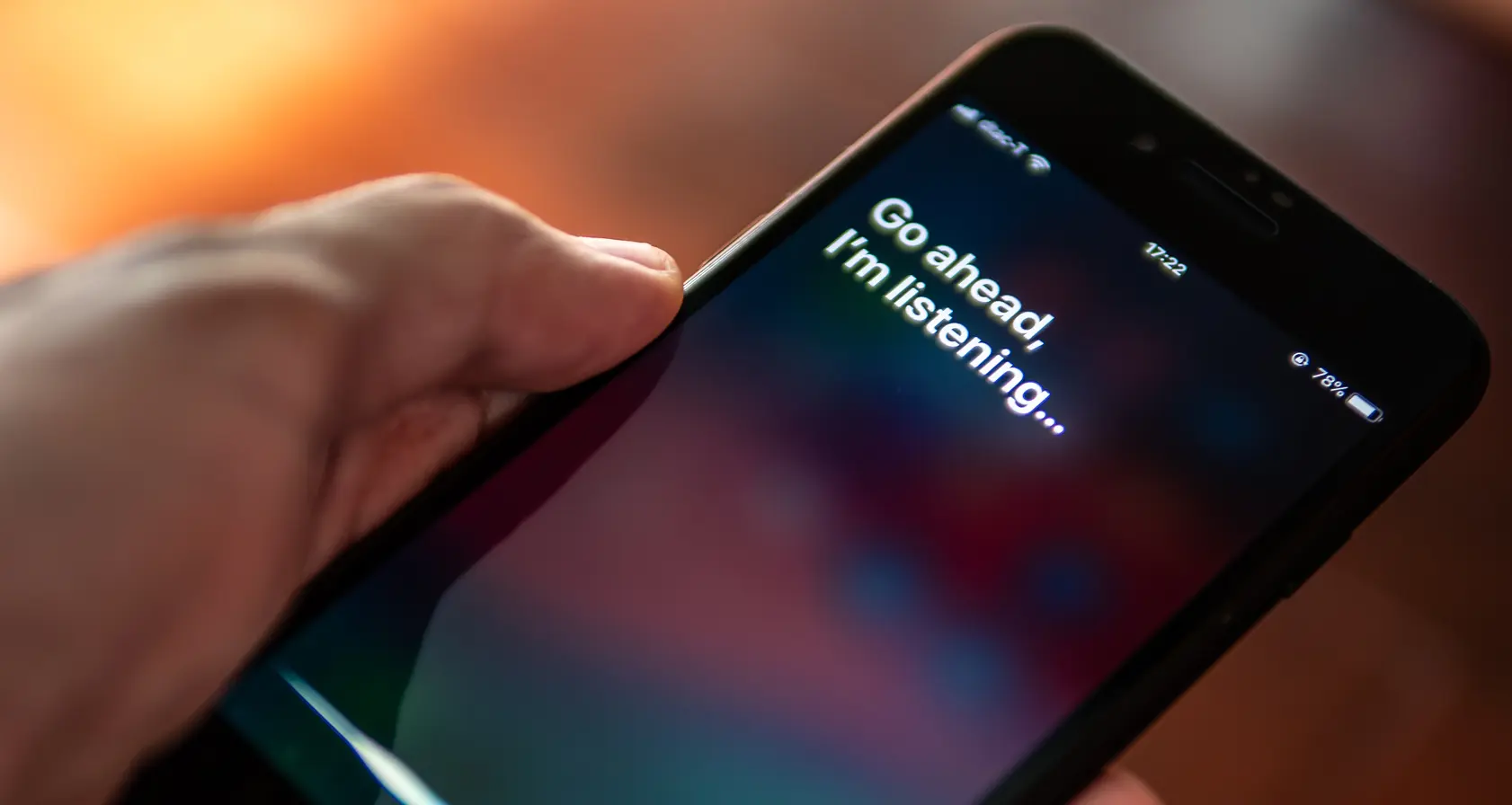

"Hey Siri" is one of the most useful features on an iPhone—until it stops responding. Whether Siri has gone completely silent, is only working sometimes, or simply won't activate at all, the fix is usually straightforward once you know where to look.
This guide walks through every known cause of Hey Siri not working, in order from the quickest fixes to the more involved ones. Start at the top and work your way down.
The most common reasons Hey Siri stops working are:
Siri handles some requests entirely on-device, but many functions—web searches, real-time information, third-party app integrations—require an active internet connection. If your cellular signal is weak or your Wi-Fi connection is unstable, Siri may appear unresponsive or return incomplete answers.
Check your signal bars and Wi-Fi indicator before going through more involved troubleshooting steps. If you're in a low-signal area, the simplest fix is to move somewhere with better coverage and try again. If you're on Wi-Fi and the connection seems slow, try toggling Wi-Fi off and back on, or switching to cellular data temporarily to see if that resolves it.
If you've recently set up a new iPhone, restored from a backup, or updated to a new major iOS version, Siri may need to be re-enabled or retrained. This is one of the most common causes of Hey Siri suddenly stopping after what seems like a routine update.
To check and enable Siri on iOS 18 and later, go to Settings, then tap Apple Intelligence and Siri. Make sure Listen For is set to "Hey Siri" or "Siri" depending on your preference. If this toggle is already on, try turning it off, waiting a few seconds, and turning it back on. You'll be prompted to complete a short voice training session, which helps Siri recognize your voice more reliably going forward.
On older iOS versions, the same settings are found under Settings, then Siri and Search.
While you're in this menu, it's worth enabling Allow Siri When Locked if you want to use Hey Siri without unlocking your phone first, and Press Side Button for Siri as a reliable backup activation method.
Sometimes Siri is working perfectly—you just can't hear its responses. This is easy to confirm: ask Siri something and watch for the visual response on screen. If text appears but no audio plays, the issue is with Siri's response settings rather than the feature itself.
To fix this, go to Settings, then Apple Intelligence and Siri, then Siri Responses. Select Prefer Spoken Responses to ensure Siri always speaks its answers aloud, including when Silent Mode is active. If you leave this set to Automatic, Siri will suppress spoken responses when it detects the phone is in Silent Mode, which catches many people off guard.
Apple patches Siri-related bugs through regular iOS updates, and running an outdated version of iOS is a surprisingly common cause of persistent Siri issues. Go to Settings, then General, then Software Update. If an update is available, install it.
If you'd rather not think about this going forward, turning on automatic updates under the same menu ensures your phone installs security patches and system updates overnight when the device is charging. This is good practice beyond just Siri—running outdated iOS software is one of the most common ways iPhones become vulnerable to security issues.
Do Not Disturb and iOS Focus modes can interfere with Siri's responsiveness in ways that aren't immediately obvious. Some Focus configurations suppress Siri's spoken responses or prevent it from activating entirely, depending on how they're set up.
Swipe down from the top right corner of your screen to open Control Center and check whether any Focus mode is currently active. If one is, tap it to turn it off and test Hey Siri again. If Siri works with Focus disabled, you can adjust the specific Focus settings to allow Siri responses by going to Settings, then Focus, selecting the relevant mode, and reviewing its options.
If your iPhone is connected to AirPods, over-ear headphones, or any Bluetooth audio device, Siri may be listening through the external microphone on that device rather than your phone's built-in mic. If those earbuds are in a case in another room, Siri effectively can't hear you. Similarly, Siri's spoken responses may be routing to the connected device rather than your phone's speaker, making it seem like nothing is happening.
To rule this out, disconnect all Bluetooth accessories and test Hey Siri with only the phone's built-in microphone and speaker active. You can do this quickly through Control Center by tapping the Bluetooth icon to turn it off entirely, or by going to Settings, then Bluetooth, and disconnecting individual devices.
A simple restart resolves a surprising number of Siri issues caused by temporary software glitches, memory problems, or background processes that have gotten stuck. It's a low-effort step worth trying before moving on to anything more involved.
On iPhone X and later, press and hold the side button and either volume button simultaneously until the power slider appears, then drag it to turn the phone off. Wait about 30 seconds, then press and hold the side button until the Apple logo appears. On older iPhone models with a home button, press and hold the side button until the slider appears and follow the same steps.
If Hey Siri responds to some people in your household but not to you, or if it's become unreliable after a period of working normally, Siri may need to relearn your voice. Voice recognition can degrade if you've been using Siri in unusual environments, if your voice has changed, or if the training data was affected during a software update.
To retrain Siri, go to Settings, then Apple Intelligence and Siri, then Listen For. Toggle the setting off, wait a moment, and toggle it back on. Follow the prompts to complete the voice setup process. You'll be asked to say a few phrases so Siri can build a fresh profile of your voice. Once complete, test Hey Siri from a few feet away to confirm it's picking you up reliably.
If Hey Siri stops working specifically when you're in your car, Apple CarPlay may be at the root of the problem. CarPlay redirects audio input and output through your car's system, which can cause conflicts with how Siri receives and delivers responses.
To troubleshoot, disconnect your iPhone from CarPlay entirely. Go to Settings, then General, then CarPlay, select your vehicle, and tap Forget This Car. Reconnect your phone and test Siri again. If you're using a USB cable to connect to CarPlay and the issue persists, try a different cable—damaged or low-quality cables cause intermittent CarPlay problems more often than most people realize.
If Siri can't hear you at all and the issue persists across all the software fixes above, the microphone may be physically obstructed. iPhones have multiple microphone ports—typically one at the bottom near the charging port, one at the top, and one near the rear camera — and any of them can accumulate lint, dust, and debris from pockets and bags over time.
Inspect the microphone grilles visually under good lighting. If you can see visible debris, clean gently with a dry, soft-bristled brush or a clean toothbrush. A microfiber cloth can help with surface-level buildup. Do not use compressed air, which can drive debris further in or damage the internal components. Do not insert anything sharp or metal into the grilles.
To confirm which microphone is affected, test Siri with earbuds plugged in—if Siri responds normally via the headphone mic but not the phone's built-in mic, the bottom microphone is likely the culprit.
If you've worked through every step above and Hey Siri still isn't functioning, the problem is likely hardware-related. A damaged or failed microphone is the most common hardware cause, and there is no reliable DIY fix for this.
Contact Apple Support through the Support app or at apple.com/support to arrange a diagnostic. If your iPhone is within its one-year warranty or covered by AppleCare+, microphone repairs are typically covered at no cost. Out-of-warranty repairs are available at Apple Stores and Apple Authorized Service Providers. Bring your device in rather than attempting self-repair, as opening a modern iPhone without proper tools voids any remaining warranty and risks further damage.
The troubleshooting steps above apply to all iPhones, but a few device-specific notes are worth knowing.
On the iPhone 18 Pro and iPhone 18 Pro Max, iPhone 17, iPhone 16, and iPhone 15 models, Siri can be activated simply by saying "Siri" without the "Hey" prefix, following changes introduced in iOS 17 and later versions. If you upgraded from an older phone and find that "Hey Siri" no longer works reliably, try just saying "Siri" instead—the shorter trigger phrase may be what your device is now configured to listen for. You can also check or customize this in Settings > Siri & Search > Listen for.
On iPad, the same Siri settings apply and are found in the same location under Settings. Note that Hey Siri on older iPad models requires the device to be plugged in—check Apple’s support documentation for your specific model to confirm whether this applies.
Inconsistent Hey Siri behavior is usually caused by one of three things: variable background noise making it harder for the microphone to pick up your voice, the device being in a Focus mode that intermittently suppresses Siri, or a degraded voice recognition profile that no longer reliably identifies your voice. Retraining Siri through the Listen For setting in Siri and Search is the most effective fix for intermittent recognition issues. If the problem correlates with specific environments—a loud kitchen, a car—the microphone may simply be struggling with ambient noise rather than there being a software fault.
Partially. Apple has expanded Siri's on-device processing capabilities significantly with recent iPhones and iOS versions, meaning basic tasks like setting timers, alarms, and reminders, sending messages to contacts, playing local music, and controlling device settings can all be handled without an internet connection. Tasks that require real-time information—web searches, weather, sports scores, directions, and third-party app integrations—still require connectivity. If Siri is responding to some requests but not others while offline, this distinction explains why.
No. Resetting Siri by toggling the Listen For setting off and back on only clears the voice recognition training profile, not any personal data, contacts, messages, or app information. You will need to complete the brief voice setup process again, but this takes under a minute and improves recognition reliability. It's one of the lowest-risk troubleshooting steps available and worth trying early in the process rather than saving it for later.














%201.webp)

.png)