iPhone Text Effects: Tips and Tricks
October 20, 2026

Phones


Wireless charging has emerged as a standard feature on most smartphones. As a result, the question of which wireless charging-ready device to buy is really a question of picking the best handset for you—and there dozens to choose from. Below, we've listed some of the top-tier premium phones on the market, all of which can be charged without having to plug a cord into the device.
From Samsung to Apple to Google, here are five of the best phones that support wireless charging in 2026.
{{takeaways}}
Before we dive into the list of phones, there are a few things that we need to get straight about wireless charging. For starters, the concept of wireless charging has been around for longer than you’re probably thinking — in fact, the first commercially available phone to feature it debuted in 2012.
Qi charging is the standard for wireless inductive charging technology, so if you see this symbol, then your phone is capable of wireless charging. Androids don’t always have this marked, but some do. If you don’t see the symbol, then you can always double-check the specs of your phone online. It’s a feature that is likely to be promoted, so you should be able to find out with a quick search query.
Remember that having wireless charging abilities doesn’t really matter if you don’t also have a wireless charger — it’s not something that’s automatically included when you buy a phone that has wireless charging enabled. You can find a variety of wireless chargers on websites like Amazon, but make sure that you read their capabilities. Most wireless chargers only have a maximum of about 15 watts, so if you’re used to charging your phone with a 60-watt charger, which is standard, be ready for wireless charging to take a bit longer.
Another important tip when you’re looking for a wireless charger is to consider the dimensions of your mobile phone. Most wireless charging pads require your phone to be laid flat, and for some phones, especially those with advanced cameras like the iPhone 18 Pro, it might be difficult to lay it properly and ensure a quality charge.
The phone case you’re using could be an issue as well—if you’re using an especially thick case, it might affect the wireless charging capabilities.
Now that we’ve covered the most important basics of wireless charging, let’s get into the phones that do it best. Here is our list of the best phones that currently feature wireless charging technology.
Both the Samsung Galaxy S26 and Galaxy S26 Ultra support wireless charging and reverse wireless charging, so you can power up earbuds, watches, or other accessories right from your phone.
The standard Galaxy S26 is compact but powerful, with a 6.3-inch Dynamic AMOLED 2x display, Snapdragon 8 Elite Gen 5 for Galaxy processor, 12GB of RAM, and a triple-camera setup led by a 50MP main lens. Its 4300 mAh battery and bright screen make it easy to use all day, indoors or outdoors.
The Galaxy S26 Ultra builds on that with a larger 6.9-inch display and a quad-camera system featuring a 200MP main camera, 50MP Periscope Telephoto, 10MP Telephoto, and 50MP Ultrawide. It also has a 5000 mAh battery, up to 1TB of storage, and includes the S Pen for note-taking and editing — making it a great option for students and creators. The S26 Ultra supports up to 25W wireless charging, though hitting those speeds consistently requires Samsung's recommended magnetic case and first-party wireless charger.
Whether you prefer the smaller Galaxy S26 or the feature-packed Ultra, both are solid choices if wireless charging is a must-have.
Flip phone designs are alive and well—and Samsung is leading the way. The new Galaxy Z Flip 8 is the latest entrant into this field, and oh what a phone it is.
The Samsung Galaxy Z Flip8 features a functional 4.1-inch cover display, a slim build, and the latest Galaxy AI features. Inside, you'll find a 6.9-inch 120Hz AMOLED display, while the FlexWindow lets you check notifications, respond to messages, and use select apps without opening the phone.
The Z Flip8 also features a 4,300mAh battery, delivering flagship-level performance in a compact form factor. It supports wireless charging at speeds of up to 15W, along with 25W wired fast charging.
The newest iPhone 18 Pro models support MagSafe and Qi2 wireless charging at up to 25W, so they work with Apple’s own accessories and a wide range of third-party chargers. With a MagSafe charger and a 35W or higher adapter, they reach 50% in about 30 minutes. Plugged in with a 60W-capable adapter, they hit 50% in about 15 minutes.
Beyond its charging capabilities, there’s a lot to like about the iPhone 18 Pro. It’s powered by the new A20 Pro processor which offers, among other things, a 40% improvement in graphics performance over its predecessor, the iPhone 17 Pro. It also features an incredibly sharp 6.3-inch Super Retina XDR display and a powerful 48MP triple-lens rear camera setup with variable aperture (a real game-changer if you know anything about photography). Battery life is excellent too, with up to 36 hours of video playback on the 18 Pro and up to 45 hours on the 18 Pro Max.
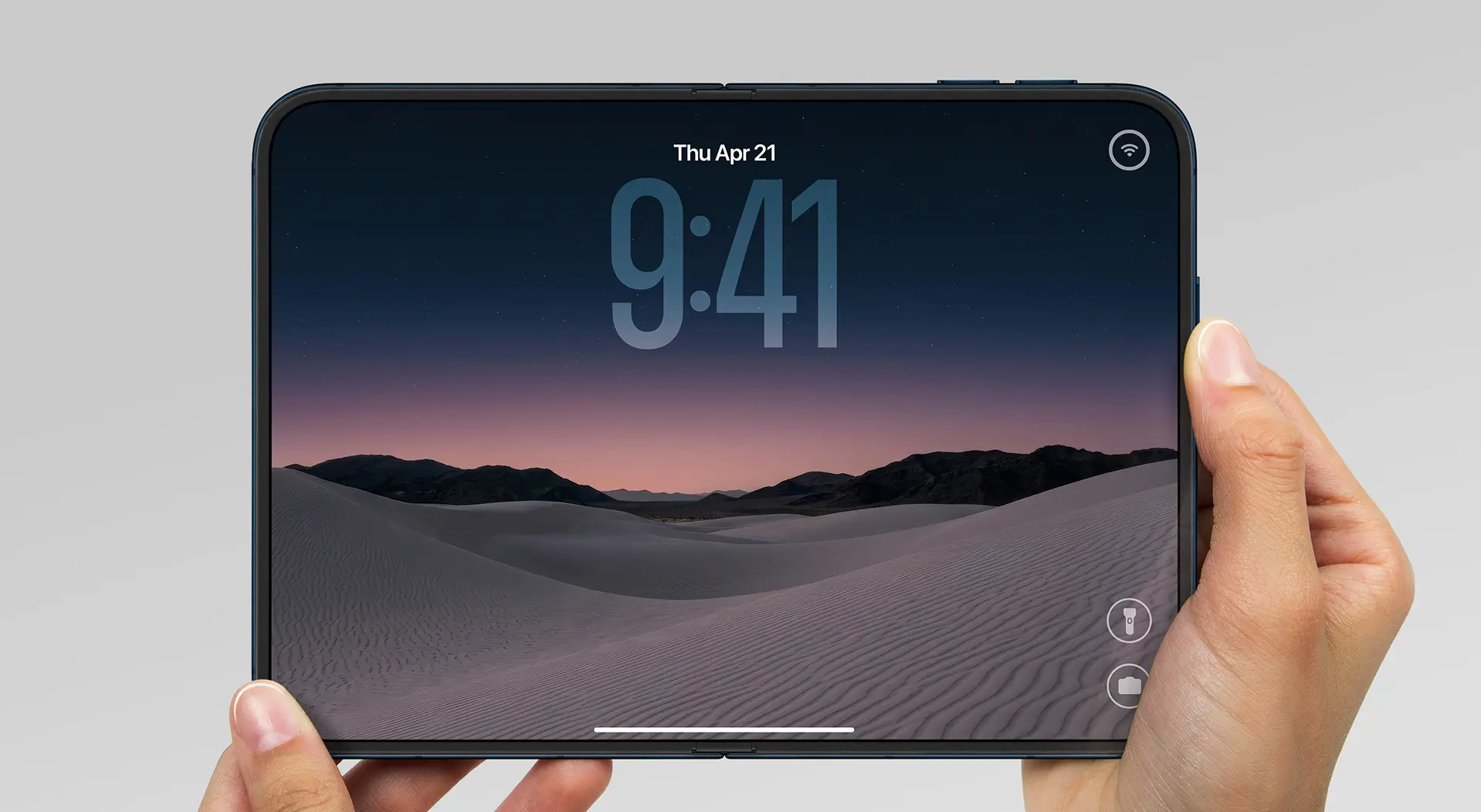
Apple’s first foldable is also one of its fastest wireless chargers. The iPhone Duo supports MagSafe and Qi2 wireless charging at up to 25W. Pair a MagSafe charger with a 35W adapter and you’ll hit 50% in about 30 minutes. Plugged in with a 60W-capable adapter, it gets to 50% in about 20 minutes. One heads-up: the box only includes a USB-C cable, so the MagSafe charger and power adapter are sold separately.
Inside, the Duo splits its power between two batteries, one in each half of the phone. Apple rates it for up to 31 hours of video playback on the 7.6-inch inner display, or up to 44 hours on the 5.4-inch cover screen. It runs the same A20 Pro chip as the iPhone 18 Pro and is the first iPhone with iPad-style Split View for running apps side by side. At $1,999, it’s the priciest phone on this list, but nothing else here gives you this much screen to charge.
The Google Pixel 11 and Pixel 11 Pro are the latest phones in Google’s flagship lineup, and both support Qi wireless charging and reverse wireless charging.
The Google Pixel 11 has a 6.3-inch Super display reaching up to 3,000 nits of peak brightness, the Google Tensor G6 chip, 12GB of RAM, and a 4,985 mAh battery for all-day power. Its triple-camera system (48MP wide, 13MP ultrawide, 10.8MP telephoto) and 13MP ultrawide front camera are great for videos and photos.
The Google Pixel 11 Pro shares the same 6.3-inch screen size but pushes brightness further with a Super Actua display reaching up to 3,600 nits, and pairs it with a more advanced triple-camera system (50MP wide, 48MP ultrawide, 48MP telephoto), up to 16GB of RAM, up to 1TB of storage, and a 4,850 mAh battery. Both models run Android 17 and come with Gemini AI features like live translation and call assistance, plus seven years of guaranteed software updates.
No matter your price point, our free, unbiased Phone Deal Finder below can help you find the best deals on wirelessly charging phones available now. Simply answer a few questions, like what model you're looking for and who your current carrier is, and in just a few seconds, we'll show you the top phone deals for you.
Many modern smartphones support wireless charging, particularly those with glass backs. These include: iPhones, Samsung Galaxy phones, Google Pixel devices, and a variety of other Android phone brands like OnePlus and LG.
If your phone has glass or plastic back, it should be compatible with wireless charging. To make sure, you can look up your model's specs online, or place it on a Qi-compatible wireless charger to see if it starts charging.
No, not all phones support wireless charging. Only certain models, typically mid-range to premium smartphones, have this feature, while many budget models do not.