


.avif)
.avif)
.avif)

iPhone Text Effects: Tips and Tricks
September 21, 2026

Phones
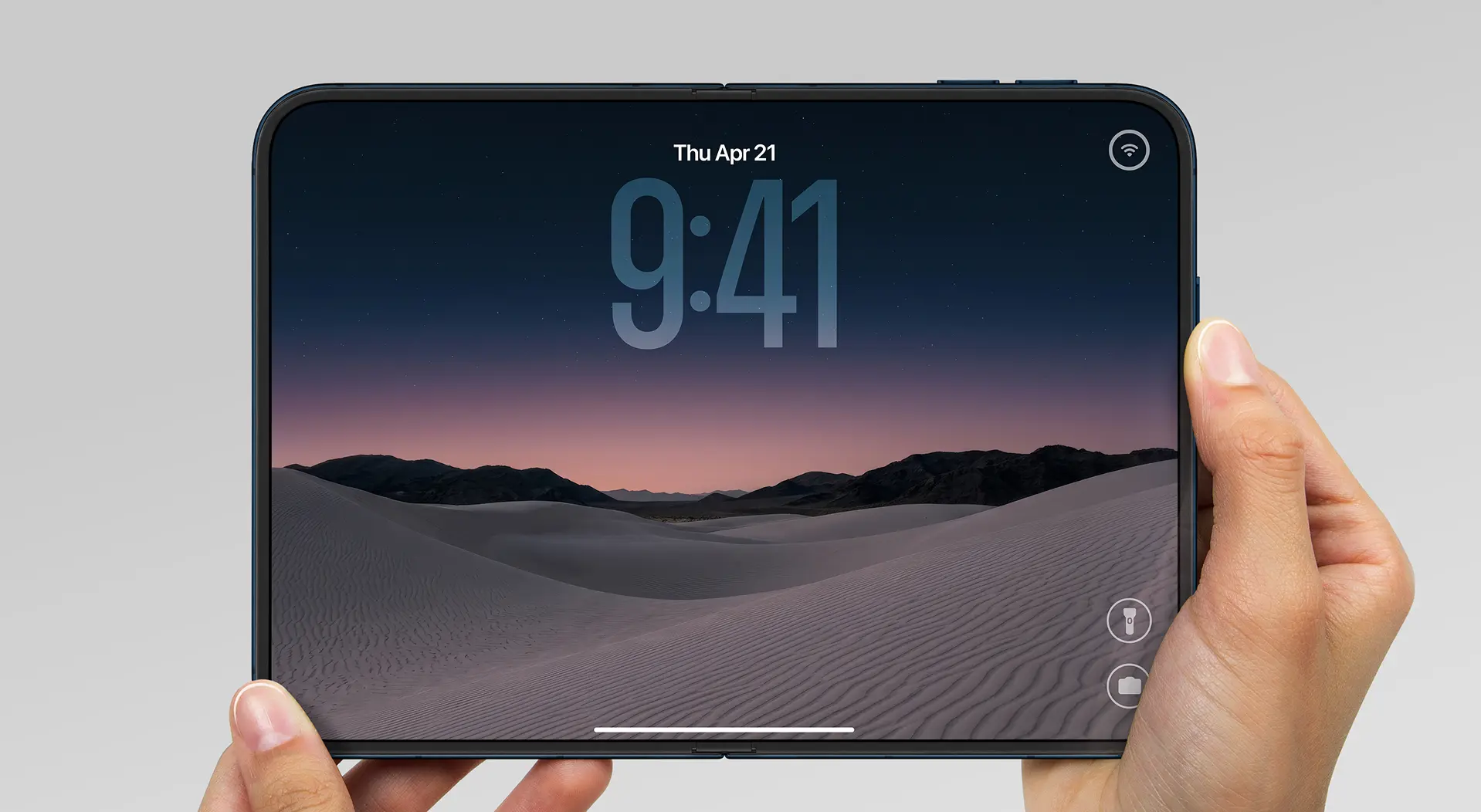

After years of hints and rumors, Apple has finally released its first foldable phone—the iPhone Duo.
This is exciting news, even for the most cynical phone veterans among us. iPhone users have been clamoring for something like this for years, anxious to see Apple apply its smartphone smarts to a—for them—brand-new kind of design.
Not surprisingly, the iPhone Duo delivers on most of its promise, with a gorgeous 7.6-inch main display that does its best to hide the crease, a tough titanium build with IP68 water resistance, and battery life that outlasts a long-haul flight.
That said, the Duo enters a market full of competitors that have been at the foldable game much longer, with multiple generations of improvements and refinements. That includes, most notably, Samsung and Google.
In this article, we'll break down how the iPhone Duo stacks up to the current foldable iterations from these two companies, i.e. the Samsung Galaxy Z Fold8 and the Google Pixel 11 Pro Fold. By the end, you should have a good idea about which device offers the sorts of features you're looking for. Read on as we discuss the iPhone Duo vs. the Samsung Galaxy Z Fold8, and the iPhone Duo vs. the Google Pixel 11 Pro Fold.
{{takeaways}}
The iPhone Duo marks Apple's first foray into the foldable market, whereas the Fold8 is Samsung's eighth such entry. Given this, you'd expect the two devices to be markedly different.
In fact, they have more in common than you'd think. The Fold8 adopts the same wider, book-style form factor Apple chose for the Duo—and Samsung beat Apple to store shelves with it. Samsung also had a front-row seat to what Apple was building, since it manufactured the folding OLED screens for the iPhone Duo.
The Galaxy Z Fold8 sports the familiar two-screen format—a 5.5-inch cover display for quick one-handed tasks, and a 7.6-inch main display that unfolds into a tablet-sized canvas.
The iPhone Duo matches that 7.6-inch inner screen and pairs it with a slightly smaller 5.4-inch cover display. Apple adds a nano-texture finish that cuts glare and makes the crease harder to spot.
Where they split is heft. The Fold8 weighs a feathery 201 grams and measures 4.5mm thin unfolded, while the Duo comes in at 254 grams and 5.2mm—though its titanium frame and IP68 rating out-tough the Fold8's IP48.
Samsung built the Fold8 around Qualcomm's Snapdragon 8 Elite Gen 5, a fast and capable processor that's built to handle a variety of tasks, including the AI-related ones that Samsung is known for. The company paired this processor with 12GB or 16GB of RAM—depending on the configuration—along with up to 1TB of storage.
The Duo runs on Apple's 2nm A20 Pro, which Apple says is up to 20% faster than last year's A19 Pro. Apple hasn't officially disclosed RAM (reports point to 12GB), but it does offer something Samsung doesn't—a 2TB storage option for those who never delete a single photo.
The Fold8 runs One UI 9 on top of Android 17, and Samsung's promising seven years of major OS updates—a software-longevity pitch it's been building toward for a few generations now.
The Duo ships with a reimagined iOS 27 built to make use of the bigger canvas, with Apple Intelligence baked in. Apple doesn't promise a set number of update years, but iPhones have a long track record of getting support well into old age.
Around back, the Fold8 gives you a 50MP main and 50MP ultrawide, while the cover and inner selfie cameras both come in at 10MP.
Apple's setup looks similar on paper—a 48MP main and 48MP ultrawide, with no telephoto on either phone. Up front, the Duo uses a 12MP cover camera and an under-display camera on the inner screen, so nothing interrupts the big display.
A 4,800 mAh battery keeps the Fold8's lights on, with 45W wired charging hitting 63% in 30 minutes, plus 20W wireless charging for topping off cord-free.
Apple hasn't revealed the Duo's battery capacity, but it rates the phone for up to 31 hours of video playback on the inner display and 44 hours on the cover screen. Fast wired charging hits 50% in about 20 minutes, and 25W MagSafe beats the Fold8 at wireless.
As with the Samsung head-to-head, this one represents a showdown between a device that's the first of its kind (Apple's first foldable in the iPhone Duo) and one that's the result of multiple generations of refinements (the Google Pixel 11 Pro Fold).
Google goes bigger than both—an 8-inch main display paired with a 6.5-inch cover screen, both LTPO OLED panels capable of hitting 3,600 nits at peak brightness. That outshines the Duo's 3,000-nit peak.
The Pixel is also lighter than the Duo at 239 grams (vs. 254) and a hair thinner unfolded at 5mm. Both carry IP68 ratings, and both keep the color menu short—Obsidian and Olive for Google, Star White and Night Sky for Apple.
The Pixel 11 Pro Fold runs on Google's own Tensor G6 chip, with a flat 16GB of RAM across every configuration—the most guaranteed memory of the three. Storage mirrors Samsung's lineup, running from 256GB to 1TB.
The Duo counters with Apple's 2nm A20 Pro and remains the only phone here that goes all the way to 2TB.
The Pixel runs stock Android 17 with Google's own Pixel software on top, and like Samsung, Google's committing to seven years of OS updates.
If you're coming from an iPhone, the Duo's iOS 27 will feel like home with more room. If you want the cleanest take on Android, the Pixel is it.
The Pixel's rear setup pairs a 48MP main with a 10.8MP telephoto and a 10.5MP ultrawide, while both the inner and cover selfie cameras land at 10MP.
That 5x telephoto is something neither the Duo nor the Fold8 offers, making the Pixel the zoom champ of the group. The Duo fires back with a sharper 48MP ultrawide and a 12MP cover camera.
A 4,806 mAh battery powers the Pixel 11 Pro Fold, with 30W wired charging and 25W wireless charging over Qi2.2's magnetic system.
The Pixel reaches 50% in about 30 minutes wired—roughly 10 minutes behind the Duo. Wireless is a draw, with both phones topping out at 25W on a magnetic charger.
You already own a MacBook, AirPods, and an Apple Watch, and you’d like your foldable to get along with them. Switching ecosystems is a lot of work just to get a bigger screen.
You’re hard on your phones. The titanium frame and IP68 rating make the Duo the toughest of the three, and the best bet for anyone who has ever dropped a phone in a pool.
You never delete anything. The Duo is the only one here with a 2TB option, so your 14,000 photos of your dog are safe.
You’re on the road a lot. Up to 31 hours of video on the inner screen gets you through the longest flights and the worst layovers.
You want a foldable that feels like a regular phone in your pocket. At 201 grams and 4.5mm unfolded, it’s the lightest and thinnest of the bunch by a wide margin.
You want something that’s been tested and refined. Eight generations in, Samsung has had plenty of time to work out the kinks.
You plan to keep your phone for years. Seven years of OS updates means the Fold8 will still be getting new features long after the novelty wears off.
You’re watching your budget, or as much as you can at nearly $2,000. The Fold8 ties for the cheapest of the three.
You want the most screen. The 8-inch main display and 6.5-inch cover screen are the biggest here, and at 3,600 nits they’re the brightest too.
You take a lot of zoomed-in photos. The 5x telephoto is the only one in this group, so concerts, wildlife, and sneaky shots of your kid’s soccer game are where the Pixel shines.
You want Android without the extras. Stock Android 17 and Google’s own software make it the cleanest experience of the three.
You multitask hard. A guaranteed 16GB of RAM in every configuration means you get the most memory no matter which model you pick.
The iPhone Duo is a remarkably confident first try. If you already live in Apple's world, it's the easy pick—tough, long-lasting, and finally giving iOS room to stretch. The Galaxy Z Fold8 is the lightest, thinnest, and (tied for) cheapest of the trio. Pick it if pocketability matters more than anything else. The Pixel 11 Pro Fold brings the biggest, brightest screens and the only telephoto lens here. Zoom lovers and Android purists, this one's for you.
Whichever way you fold, budget accordingly—all three start within $100 of $2,000.
The Galaxy Z Fold8 wins easily at 201 grams and just 4.5mm thin unfolded. The Pixel 11 Pro Fold comes in at 239 grams, and the iPhone Duo is the heaviest at 254 grams. That extra weight does get you a sturdier titanium frame.
It depends on how you shoot. The Pixel 11 Pro Fold is the only one of the three with a 5x telephoto lens, so it’s the pick for zoom shots. The iPhone Duo has the sharpest ultrawide at 48MP, and its under-display camera keeps the inner screen uninterrupted.
Yes. The iPhone Duo has a titanium frame and an IP68 rating, while the Fold8 is rated IP48, so the Duo handles water and dust better. The Pixel 11 Pro Fold is also rated IP68.













.png)