


.avif)
.avif)
.avif)

iPhone Text Effects: Tips and Tricks
September 21, 2026

Phones


As of September 2026, the phone with the biggest screen is the Google Pixel 11 Pro Fold at 8 inches when unfolded—making it the largest display you can carry in your pocket. For a traditional non-folding phone, the Samsung Galaxy S26 Ultra, Google Pixel 11 Pro XL, and iPhone 18 Pro Max all tie at 6.9 inches.
Screen size matters more than ever. Streaming, gaming, video calls, and productivity all benefit from more real estate. And with flagship phones now pushing display quality that rivals small TVs, picking the right screen size is one of the most important decisions you'll make when buying a new phone.
This guide covers the six biggest-screen phones you can buy right now—ranked from largest to smallest, with honest pros, cons, and specs for each.
The phone with the biggest screen in 2026 is the Google Pixel 11 Pro Fold at 8 inches (inner display, unfolded). Among foldables, the Samsung Galaxy Z Fold8 comes in close at approximately 7.6–7.9 inches. For a traditional slab-style phone, the Samsung Galaxy S26 Ultra and Google Pixel 11 Pro XL both top out at 6.9 inches.
Here's how all six phones in this guide stack up:
One important note on foldables: The inner display numbers are impressive, but they come with trade-offs—a visible crease, higher price, and a different form factor than a traditional phone. We'll break all of that down in each section below.
Before diving into individual reviews, it helps to know what you're actually comparing. Bigger isn't always better—it depends on how you use your phone.
A 6.9" phone with thin bezels can actually feel smaller in your hand than a 6.7" phone with thick bezels. What matters is the screen-to-body ratio—how much of the phone's front face is actually display. The Galaxy S26 Ultra and Pixel 11 Pro XL both achieve over 90% screen-to-body ratios, which means they feel more compact than their screen sizes suggest.
This is the biggest decision you'll make in this category.
If you want the biggest screen possible and price isn't a barrier, a foldable is the way to go. If you want a large screen without the foldable trade-offs, the 6.9" slabs are excellent.
No doubt about it—anything over 6.5" requires some adjustment. Most flagship phones include one-handed mode features (iOS Reachability, Android's one-handed mode) that shrink the active display area so you can reach the top of the screen with your thumb. Worth enabling if you're coming from a smaller phone.
Not all big screens are equal. Here's what to look for:
Larger screens mean more glass surface area—and more surface area to crack. Repair costs for flagship screens run $300–$400+. Every phone in this guide uses Gorilla Glass Victus 2 or equivalent, and all carry IP68 water resistance ratings. Foldable inner screens are more delicate—avoid sharp objects and be mindful of debris in the hinge.
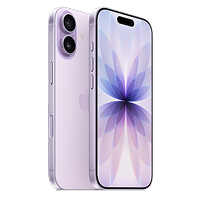
The iPhone 18 Pro Max just landed on September 18th, and it ties the S26 Ultra and Pixel 11 Pro XL at 6.9 inches for the largest screen you can get without folding anything. What sets it apart isn't the display size—it's everything Apple builds around it: a new A20 Pro chip with hardware-accelerated ray tracing, Ceramic Shield 2 on both the front and back, and video tools that still set the bar for anyone shooting more than snapshots.
Pros
Cons
The biggest phone screen you can buy right now.
The Pixel 11 Pro Fold is Google's most ambitious phone yet—and it earns the top spot in this guide with an 8-inch Super Actua Flex inner display that Google calls "our largest yet." Unfolded, it's closer to a small tablet than a traditional phone. Folded, it's surprisingly pocketable thanks to a slim profile and a gearless hinge that lies completely flat.
Bottom line: If you want the biggest phone screen period, the Pixel 11 Pro Fold is your answer. The 8" inner display is genuinely impressive for media, productivity, and multitasking. Just go in knowing you're paying a premium for the form factor—and that the crease is real.
Find the best Pixel 11 Pro Fold deals with Navi's free Phone Deal Finder →
Samsung's biggest foldable—now wider and more tablet-like than ever.
The Galaxy Z Fold 8 represents Samsung's latest evolution of the book-style foldable. This generation takes a passport-style approach—wider and shorter than previous Fold models—making the inner display feel more like a proper tablet and less like a stretched phone. The cover display is also more usable than earlier generations.
Bottom line: The Z Fold 8 is a powerhouse with a great processor and a genuinely improved inner display. If you're deep in the Samsung ecosystem and want DeX desktop mode, it's worth checking out. But the Pixel 11 Pro Fold edges it out on display size, hinge quality, and dust resistance.
Compare Galaxy Z Fold 8 deals free with Navi →
Our pick for Samsung's best big-screen slab phone—with an S Pen.
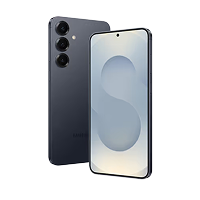
If you want a large screen without the foldable form factor, the Galaxy S26 Ultra is Samsung's flagship answer. At 6.9 inches, it ties for the largest non-folding phone screen available. It also brings back the S Pen stylus—a feature no other phone in this guide offers—and introduces a hardware-level Privacy Display that makes the screen unreadable to anyone not looking directly at it.
Bottom line: The Galaxy S26 Ultra is our pick for anyone who wants the biggest non-folding screen with the most versatile camera system. The S Pen alone sets it apart from every other slab phone in this guide. If you do a lot of note-taking or creative work on your phone, this is the way to go.
Find Galaxy S26 Ultra deals with Navi's free Phone Deal Finder →
Google's biggest slab phone—with the longest software support of any Android phone.
The Pixel 11 Pro XL matches the Galaxy S26 Ultra's 6.9" screen size but takes a different approach: pure Android, seven years of guaranteed OS updates, and Google's computational photography that consistently punches above its hardware specs. If long-term value matters to you, this phone is hard to beat.
Bottom line: The Pixel 11 Pro XL is our pick for best bang for your buck among the large-screen slab phones in this guide. The 3,600-nit display is stunning, the seven-year update commitment is unmatched in Android, and the $1,099 starting price is $200 less than the Galaxy S26 Ultra. If you don't need an S Pen, this is worth checking out seriously.
Compare Pixel 11 Pro XL deals free with Navi →
The Google Pixel 11 Pro Fold has the biggest phone screen in 2026 at 8 inches (inner display, when unfolded). It's a foldable phone, so that 8" display folds in half when not in use. For a traditional non-folding phone, the Samsung Galaxy S26 Ultra and Google Pixel 11 Pro XL both top out at 6.9 inches—tied for the largest slab-style phone screen available.
The largest phone screen size in 2026 is 8 inches, on the Google Pixel 11 Pro Fold's inner display. Among non-folding phones, the maximum is 6.9 inches, shared by the Samsung Galaxy S26 Ultra, Google Pixel 11 Pro XL, and iPhone 17 Pro Max.
Samsung's biggest-screen phone is the Galaxy Z Fold 8, with an inner display of approximately 7.9 inches when unfolded. For a non-folding Samsung phone, the Galaxy S26 Ultra has the largest screen at 6.9 inches.
It depends on how you use your phone. Bigger screens are genuinely better for streaming video, gaming, reading, and productivity tasks like email and document editing. But phones over 6.5" require some adjustment for one-handed use, and they're harder to fit in smaller pockets. Foldables solve the pocketability problem but add cost and a visible crease. Our take: if you spend a lot of time consuming content or working on your phone, the extra screen real estate is worth it. If you mostly use your phone for calls, texts, and quick tasks, a smaller phone will feel more comfortable day to day.
Foldables are worth it if you want the absolute largest screen in a phone-sized package and you're willing to pay for it. The Pixel 11 Pro Fold and Galaxy Z Fold 8 both offer inner displays that are significantly larger than any slab phone—essentially giving you a small tablet that fits in your pocket. The trade-offs are real, though: foldables cost $1,700–$1,900+, weigh more, have a visible crease on the inner display, and require more careful handling than a standard phone. If you're replacing both a phone and a tablet, a foldable could potentially save you money in the long run—though that depends on what you'd otherwise spend on each device. If you just want a bigger phone screen without the complexity, the 6.9" slab options are simpler and more durable.
The Google Pixel 11 Pro XL offers the best value among large-screen phones in 2026. At ~$1,099, it's $200 less than the Galaxy S26 Ultra and $100 less than the iPhone 17 Pro Max—while matching both on screen size (6.9"), exceeding both on peak brightness (3,600 nits), and offering the longest software update commitment of any Android phone (7 years). If you're looking for a big screen without paying flagship-of-flagships prices, the Pixel 11 Pro XL is the way to go.
The biggest phone screen you can buy right now is the Google Pixel 11 Pro Fold at 8 inches. If foldables aren't your thing, the Samsung Galaxy S26 Ultra, Google Pixel 11 Pro XL, and iPhone 17 Pro Max all tie at 6.9 inches—each with a different set of strengths.
Here's a quick cheat sheet:
Once you've picked your phone, the next step is finding the best deal on it—and that's where Navi comes in. Our free, unbiased Phone Deal Finder analyzes millions of phone deals across carriers daily, so you can see exactly what you'll pay (including trade-in value and plan costs) before you commit. No carrier bias, no sales pressure—just the numbers.
Find your best phone deal free with Navi's Phone Deal Finder →










%201.webp)

.png)