


.avif)
.avif)
.avif)

iPhone Text Effects: Tips and Tricks
September 21, 2026
%201.avif)
Verizon Wireless is the biggest carrier in the country, with national 4G LTE and 5G networks that stretch from coast to coast. Boost Mobile is a slightly smaller provider that makes use of its own network (powered by Dish)—plus some partner networks—to provide nationwide coverage to its 7.5 million customers.
Both carriers offer high quality—if quite different—customer experiences. In this article, we’ll compare the two, paying particular attention to the types of plans each offer. By the end, you should have a clear idea about which one is for you. Read on as we compare Boost Mobile vs. Verizon.
Verizon now offers four primary unlimited plans. The newest addition is Simplicity, a build-your-own plan that starts at $30/month for a single line with Auto Pay and a switcher discount. It includes unlimited premium data and 10GB of mobile hotspot data, while allowing customers to customize their service with optional streaming, travel, security, hotspot, and connected-device add-ons. The carrier also continues to offer its three traditional postpaid unlimited plans: the entry-level Unlimited Welcome, the mid-tier Unlimited Plus, and the premium Unlimited Ultimate. Unlimited Welcome is a basic unlimited option, while Unlimited Plus and Unlimited Ultimate include unlimited premium data, larger hotspot allowances, and more robust travel benefits.
{{cards-1}}
Boost Mobile also sells three core unlimited plans: the entry-level Unlimited, the mid-range Unlimited+, and the Unlimited Premium. The latter two plans feature unlimited talk and text to 200+ countries, as well as hotspot functionality.
We recommend going with Unlimited Premium or Unlimited+ if you’re looking for a plan that includes lots of premium data (50GB and 40GB respectively), as well as the ability to apply that data towards hotspot usage. If, instead, you can make do with less data—and don’t need hotspot data—you’ll save a lot by going with the standard Unlimited plan at $25/month.
{{cards-2}}
Verizon’s 4G LTE network is generally understood to be the best in America, outdoing the likes of AT&T and T-Mobile. Verizon’s 5G network, while smaller and less far-reaching, is growing fast as the company installs more towers. The combination of these two networks means that Verizon offers some of the best coverage in the country.
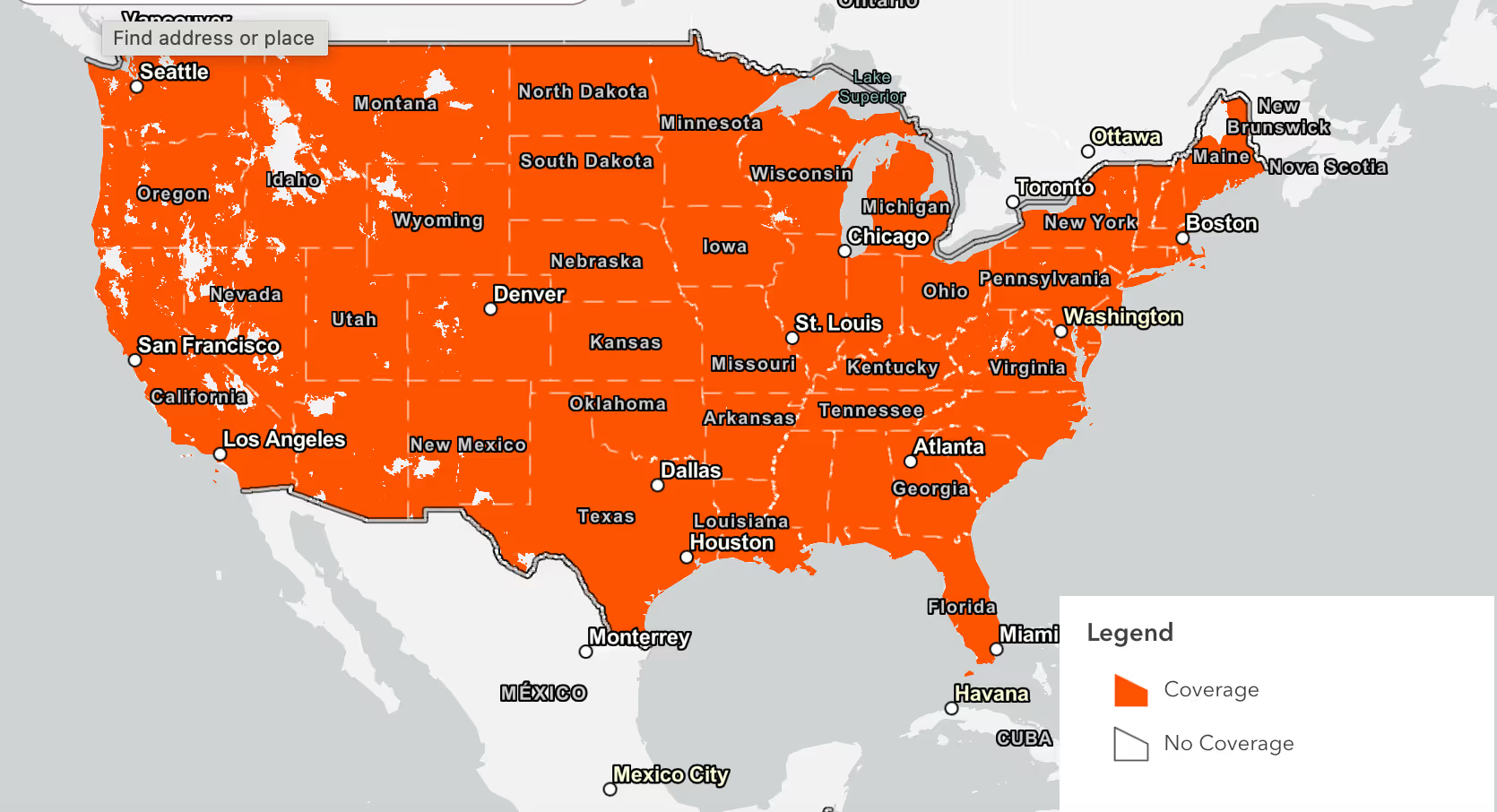
Boost Mobile mostly uses its own system of top-notch 5G and 4G LTE networks to provide coverage to their customers (the company claims it offers 99% nationwide coverage). This includes the powerful nationwide Dish network. You can check out Boost's coverage reach below:
Signing up for a Verizon plan means you get all of the perks that come along with going with a major postpaid carrier, including excellent coverage and a wide range of plan options. Customers looking for the lowest monthly price should consider Simplicity, while those who need larger hotspot allowances and the most comprehensive travel benefits will be better served by Unlimited Plus or Unlimited Ultimate.
Boost Mobile is a bit more pared-back and budget-oriented in its offerings. While the carrier is not technically a prepaid brand anymore, it retains an MVNO vibe. You’ll save money by going with Boost, but still enjoy the backing of excellent nationwide coverage.
Select the carrier you are most interested in:








.png)


