


.avif)
.avif)
.avif)

iPhone Text Effects: Tips and Tricks
September 21, 2026

Phones
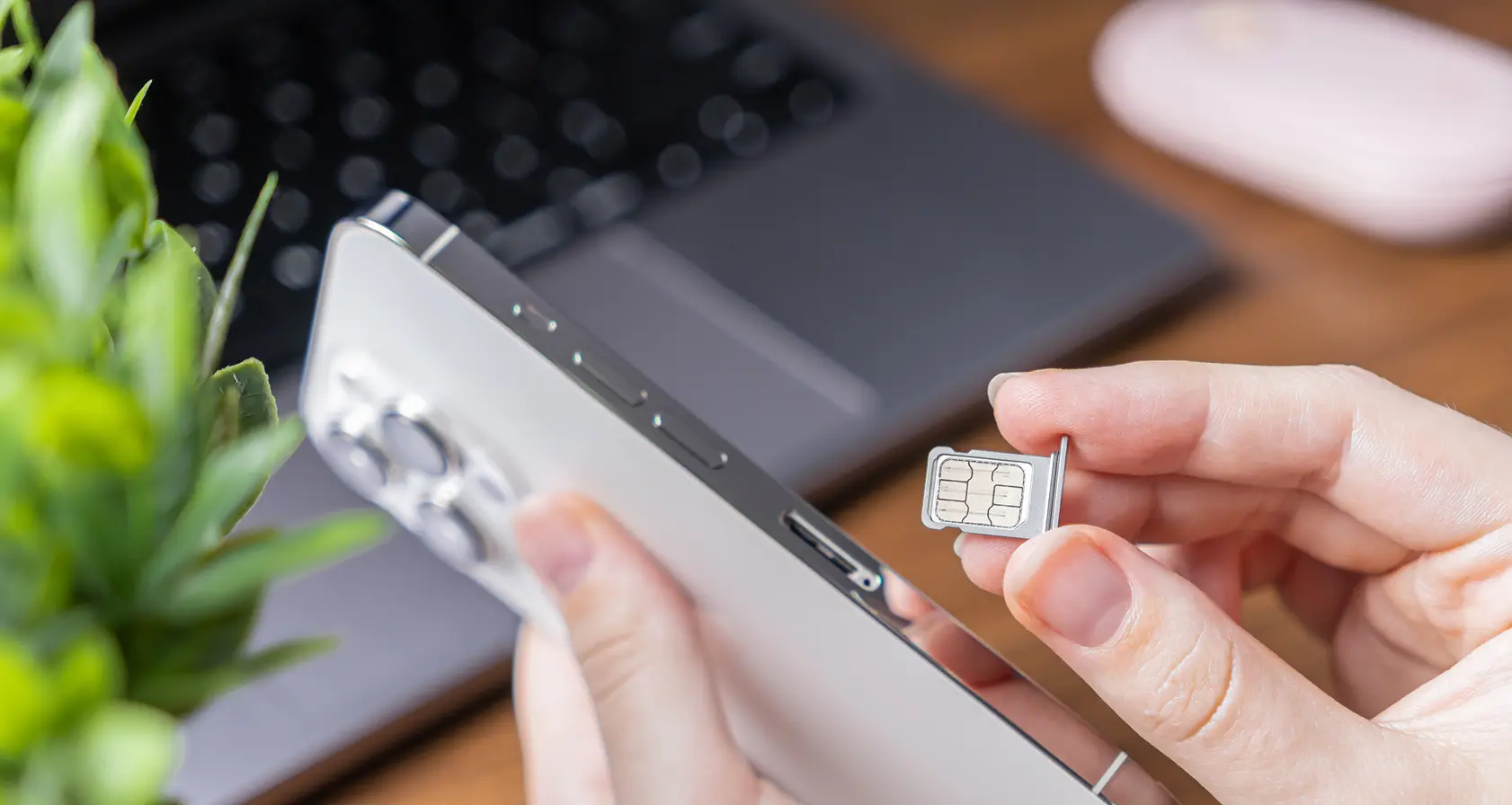

Your SIM card, also known as your subscriber identity module, is the piece of hardware that connects your phone to your carrier's network. Without an activated SIM, you won't have a phone number, cell service, or mobile data. Activating one is usually straightforward, but the exact steps vary depending on your carrier, your device, and whether you're using a physical SIM or an eSIM.
This guide walks through activation for the three major US carriers—T-Mobile, Verizon, and AT&T—and covers what to do if something goes wrong along the way.
{{cta_carousel}}
Before you start the activation process, it helps to know what type of SIM you have, because the steps differ.
A physical SIM is a small removable chip that slots into a tray on the side of your phone. If you've ever used a SIM ejector tool or a straightened paperclip to open a little tray on the side of your device, you've handled a physical SIM. These are transferable between phones, as long as both devices are unlocked or on the same carrier.
An eSIM is a digital SIM built into the phone itself. There is no physical card to insert or remove. Instead, you download a carrier profile onto the embedded chip, which means activation is done entirely through software. Most modern smartphones — including recent iPhone, Samsung Galaxy, and Google Pixel models — support eSIM, and many now support multiple eSIM profiles simultaneously, letting you switch between carriers without touching any hardware.
Some phones support dual SIM, meaning they can hold both a physical SIM and an eSIM at the same time. This is useful if you want a personal and work line on a single device, or if you travel internationally and want to add a local data SIM without giving up your primary number.
Activating a SIM card on T-Mobile can be done entirely online through your account dashboard.
Log into your T-Mobile account and select the line of service you want to make changes to. Complete the security verification step, then choose either SIM or eSIM depending on what you're activating. Follow the on-screen prompts and enter either your ICCID number (found on the physical SIM card itself or in your phone's settings) or your EID number (for eSIM). Once submitted, the activation typically processes within a few minutes.
If you're activating an eSIM on T-Mobile, make sure your phone is connected to Wi-Fi before starting. The carrier profile needs to download over an internet connection before cellular service kicks in, and you won't have that until the process completes.
T-Mobile also sells SIM cards directly through its website and in-store if you need a new one rather than transferring an existing one.
Verizon's SIM activation process is handled through the My Verizon portal. Log into your account and navigate to the Activate or Switch Device page, then follow the prompts through to completion. The process will ask you to confirm your device's IMEI number, which you can usually find in your phone's settings under About Phone, or by dialing *#06# from your keypad.
One thing Verizon is particularly clear about: not all SIM cards are compatible with all phones. If you're moving a SIM from one device to another, check that both devices operate on compatible network bands before assuming the transfer will work. Verizon's website has a compatibility checker that can confirm this before you commit.
For eSIM activation on Verizon, the process is initiated through the same My Verizon portal but will route you through a QR code scan or direct download depending on your device model.
AT&T suggests placing a test call first, since some devices sold directly through the carrier come pre-activated out of the box. If your phone isn't already active, go to att.com/getstartedbiz, select Activate your device, and follow the on-screen prompts.
AT&T's eSIM activation for iPhones can also be done directly through the iOS Settings app under Cellular, without needing to visit the website at all. On Android devices like the Samsung Galaxy series, eSIM activation typically goes through the AT&T website or the AT&T ActiveArmor app.
If the online process fails at any point with any of the three carriers, visiting a physical store is always an option and is often the fastest resolution for more complicated situations like number transfers or account verification issues.
If you've just bought a new phone and want to move your existing number and plan over, the process is slightly different from activating a brand new line.
For a physical SIM, you can often simply remove the SIM from your old phone and insert it into the new one, provided both phones use the same SIM size and are on the same carrier. Power the new phone on and it should connect automatically. If it doesn't, a restart usually resolves it.
For an eSIM transfer, most carriers now support eSIM Quick Transfer, which lets you move your eSIM profile from one phone to another without contacting the carrier at all. On iPhone, this is built into the setup process when you restore from a backup. On Android, the process varies by manufacturer but is generally found in the Settings app under Connections or SIM card manager.
If you're switching carriers at the same time as getting a new phone, you'll need to go through the new carrier's activation process from scratch and request a number port from your old carrier. Have your account number and PIN from the old carrier ready, as these are required to authorize the transfer.
Because eSIM activation trips up a lot of people, it's worth walking through it in more detail.
The most common method is QR code activation. Your carrier will either email you a QR code or display one in your account portal. On iPhone, go to Settings, then Cellular, then Add Cellular Plan, and scan the code. On Samsung devices, go to Settings, then Connections, then SIM card manager, and select Add mobile plan. On Google Pixel phones, go to Settings, then Network and Internet, then SIMs, and tap the plus icon.
Some carriers, including AT&T and T-Mobile, also support direct eSIM download without a QR code, where the carrier pushes the profile directly to your device after you authenticate through the app or website. This is faster when it works, but QR code activation is the more universally reliable fallback.
Once the profile is downloaded, your phone may need a restart before service activates fully. If you have both a physical SIM and an eSIM installed, make sure you've set the correct one as your primary line for calls, texts, and data in your phone's SIM settings.
Activation failures are frustrating but usually fixable. Here are the most common causes and how to address them.
Activating a SIM card is a quick process when everything goes smoothly, but it helps to know what you're working with before you start. Understanding whether you have a physical SIM or eSIM, whether your phone is locked or unlocked, and whether you're activating a new line or transferring an existing one will put you ahead of most of the common problems people run into.
Your ICCID number is printed on the physical SIM card itself and is also visible in your phone's settings under About Phone or General, depending on whether you're on Android or iOS. Your EID, which is used for eSIM activation, is found in the same settings menu — on iPhone it's under General and then About, and on most Android phones it's under About Phone and then SIM card status. You can also find both numbers by dialing *#06# on most devices.
Yes, in most cases. All three major carriers — T-Mobile, Verizon, and AT&T — allow full SIM activation through their websites or apps without requiring a phone call. The only situations that typically require speaking to a representative are complex account issues, number ports that fail partway through, or cases where identity verification can't be completed online.
These are two separate things that are often confused. Activating a SIM means registering it with a carrier so your phone can access its network. Unlocking a phone means removing the carrier restriction that prevents it from accepting SIM cards from other networks. If you bought your phone outright or have finished paying off your installment plan, it should already be unlocked. If you're not sure, contact your carrier — they're required by law to unlock eligible devices upon request.


Select the carrier you are most interested in:













.png)